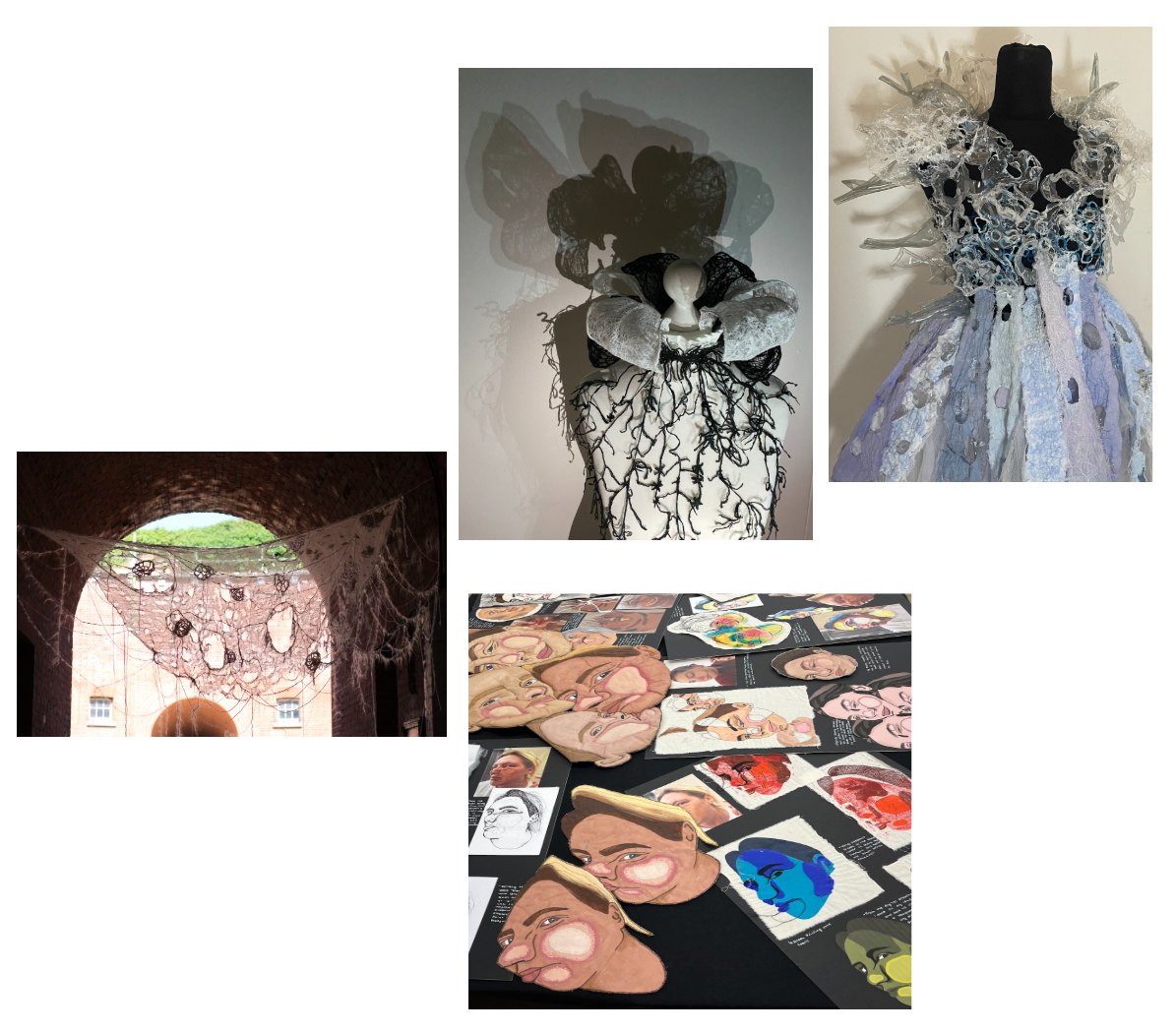
Textiles
Textiles is a subject that blends artistic expression, practical skills, and a deep understanding of textile traditions and contemporary techniques. It empowers students to design and create a wide range of textile outcomes, fostering creativity, problem-solving, and critical thinking.
Key Stage 3: Building a Foundation
Our Key Stage 3 Textiles curriculum offers a diverse exploration of textile design, equipping students with a strong foundation for their future studies.
- Years 7 & 8: Exploring Textile Techniques
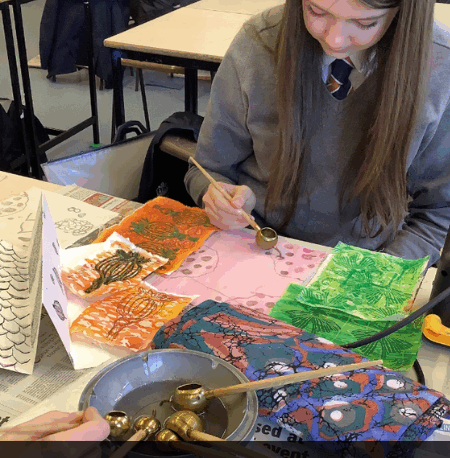
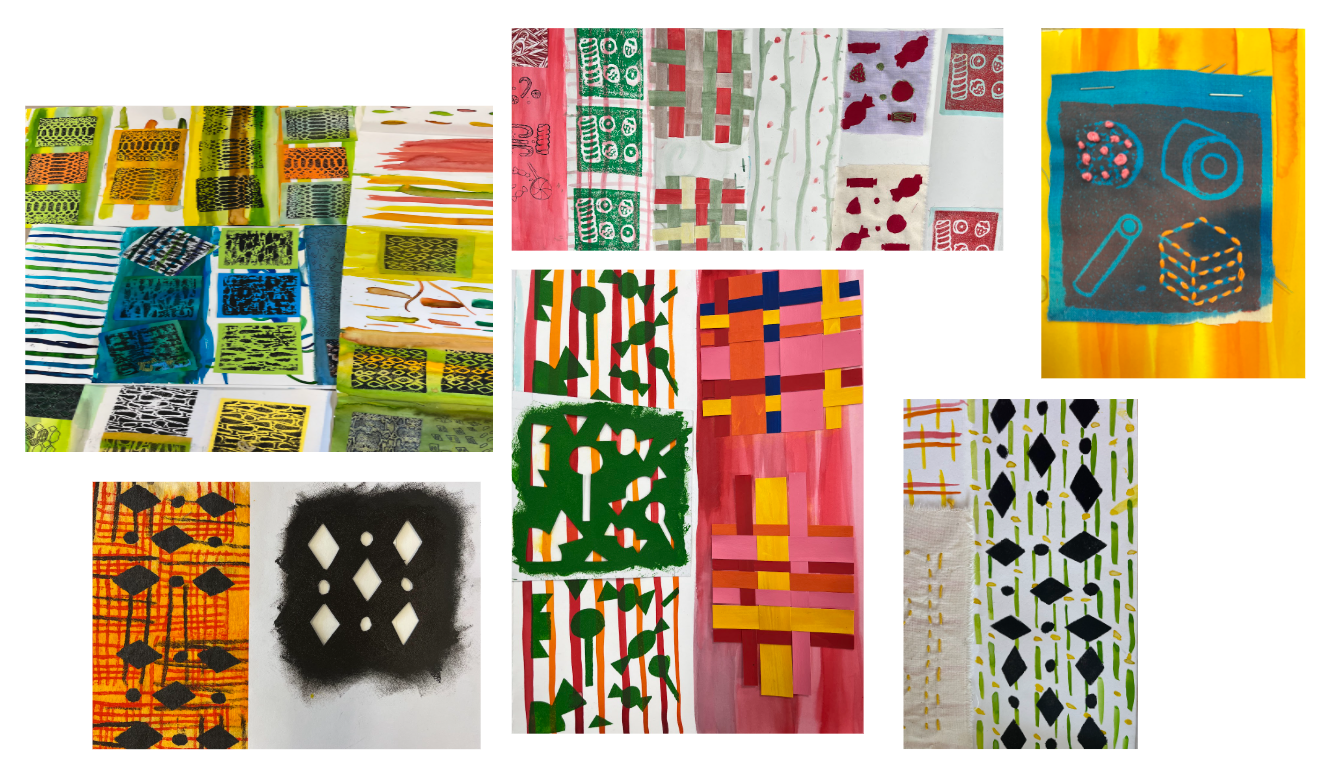
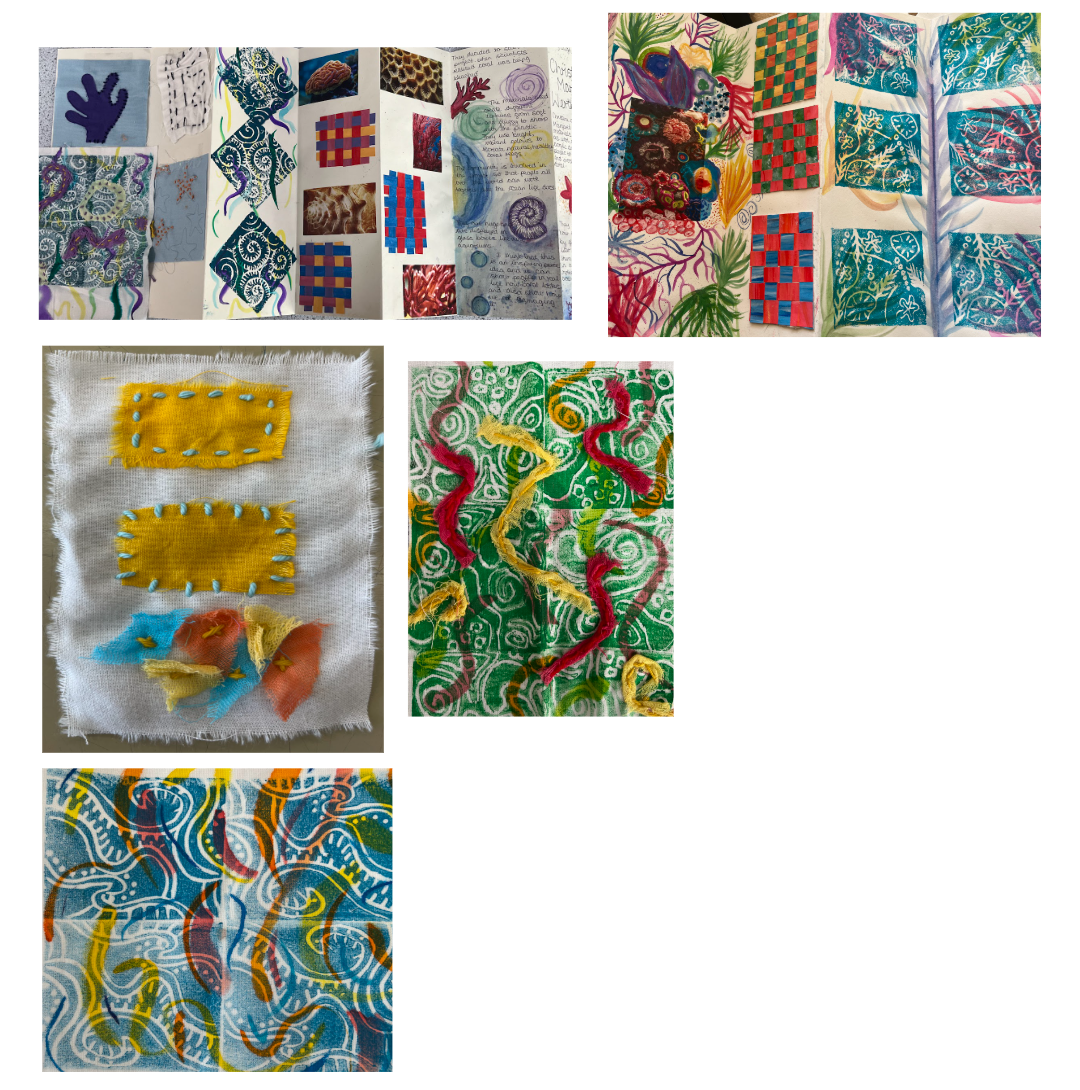
- Students delve into a variety of textile processes, including polyblock printing, weaving, stencil printing, and hand embroidery.
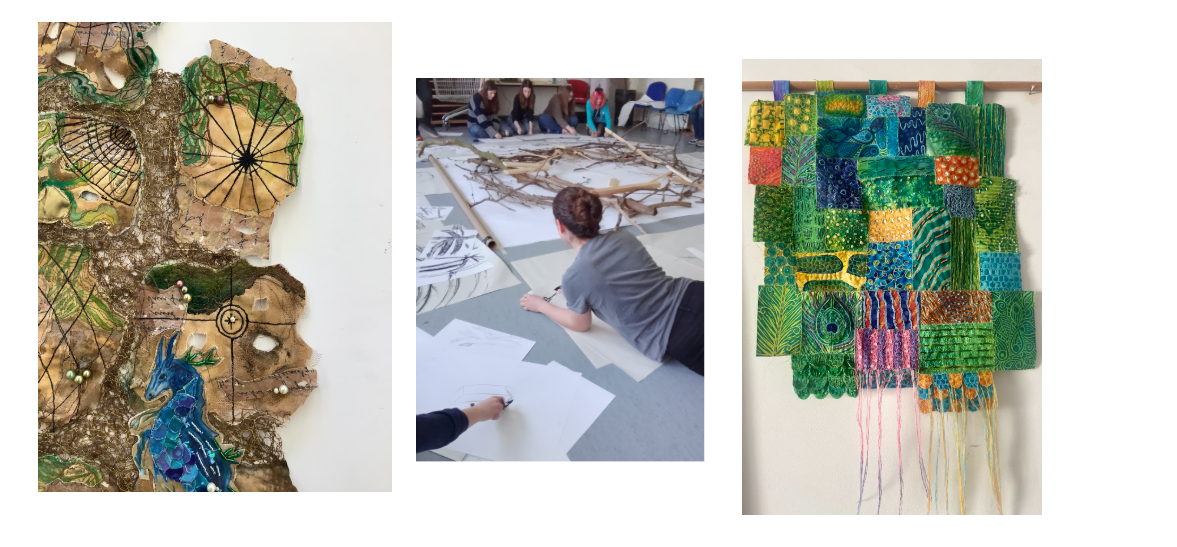
- For Year 7, the ‘Sweets’ theme offers a rich source of colourful inspiration whilst Year 8 investigates the intricate patterns, vibrant colours, and diverse textures of Malawian textiles, cultivating an enhanced understanding of cultural heritage.
- Pupils gain insights into the historical and modern-day processes of textile production.
Year 9: Preparing for GCSEs and Beyond
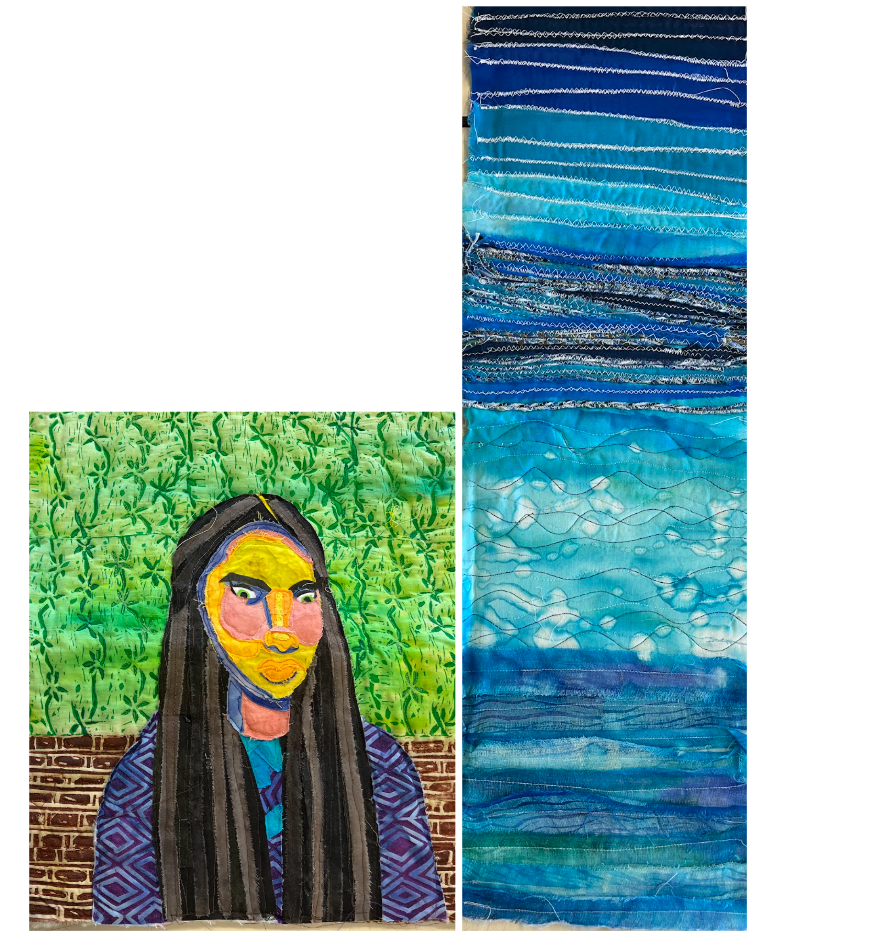
- Building upon their earlier skills, students create a printed panel embellished with hand-painted elements, appliqué, and embroidery.
- A focus on colour, pattern, and design interpretation helps students develop their artistic abilities.
- Through the exploration of artists’ work highlighting climate change, students learn about the powerful role of art in conveying important messages and promoting environmental awareness.
This curriculum provides students with a solid foundation in textiles, preparing them for future studies and inspiring them to become creative and informed textile practitioners.
GCSE Textile Design
The GCSE Textiles course (AQA specification) encourages students to explore their creativity, develop personal ideas, and experiment with a wide range of textile techniques. Through hands-on experience and contextual understanding, students will learn to:
- Research and develop ideas: Explore personal interests and inspirations to create meaningful textile outcomes.
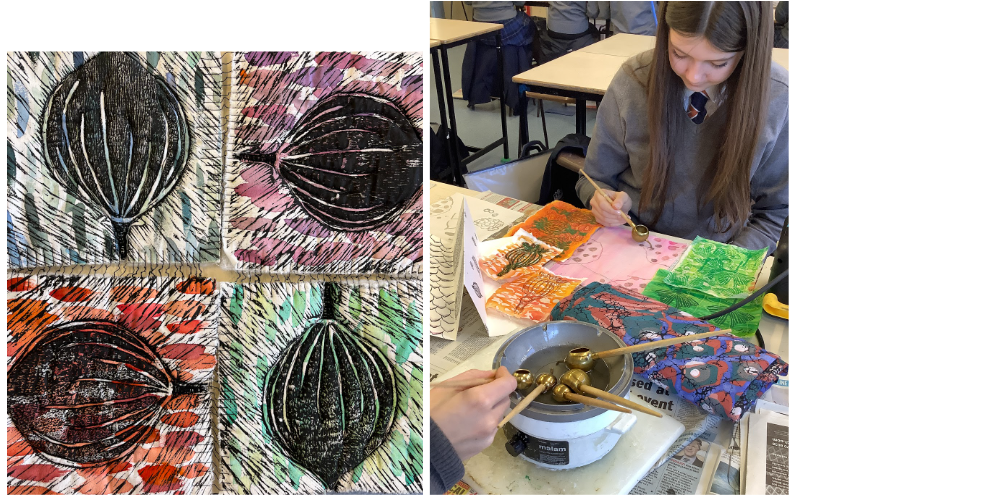
- Explore textile techniques: Gain proficiency in a variety of techniques, including hand and machine stitching, screen printing, lino printing, batik, and fabric manipulation.
- Understand context: Explore the historical, cultural, and social significance of textiles, and how these factors influence design and production.
Assessment:
The GCSE Textiles course is assessed through a combination of coursework and an externally set task:
- Coursework (60%): Students submit two coursework projects that demonstrate their understanding of textile techniques, design skills, and contextual knowledge.
- Externally Set Task (40%): Students respond to a task set by the examination board, which assesses their ability to apply their knowledge and skills in a new context.
This comprehensive approach to GCSE Textiles provides students with a solid foundation in textile design and prepares them for further studies or careers in the creative industries.
A level Textile Design (AQA specification)
The A Level Textiles course offers a comprehensive exploration of textile design and production. It is ideal for students with a passion for pattern, colour, texture, and creative expression. Through practical experimentation and theoretical study, students will develop the skills and knowledge necessary for a successful career in the textile industry or further study in related fields.
Key Course Features:
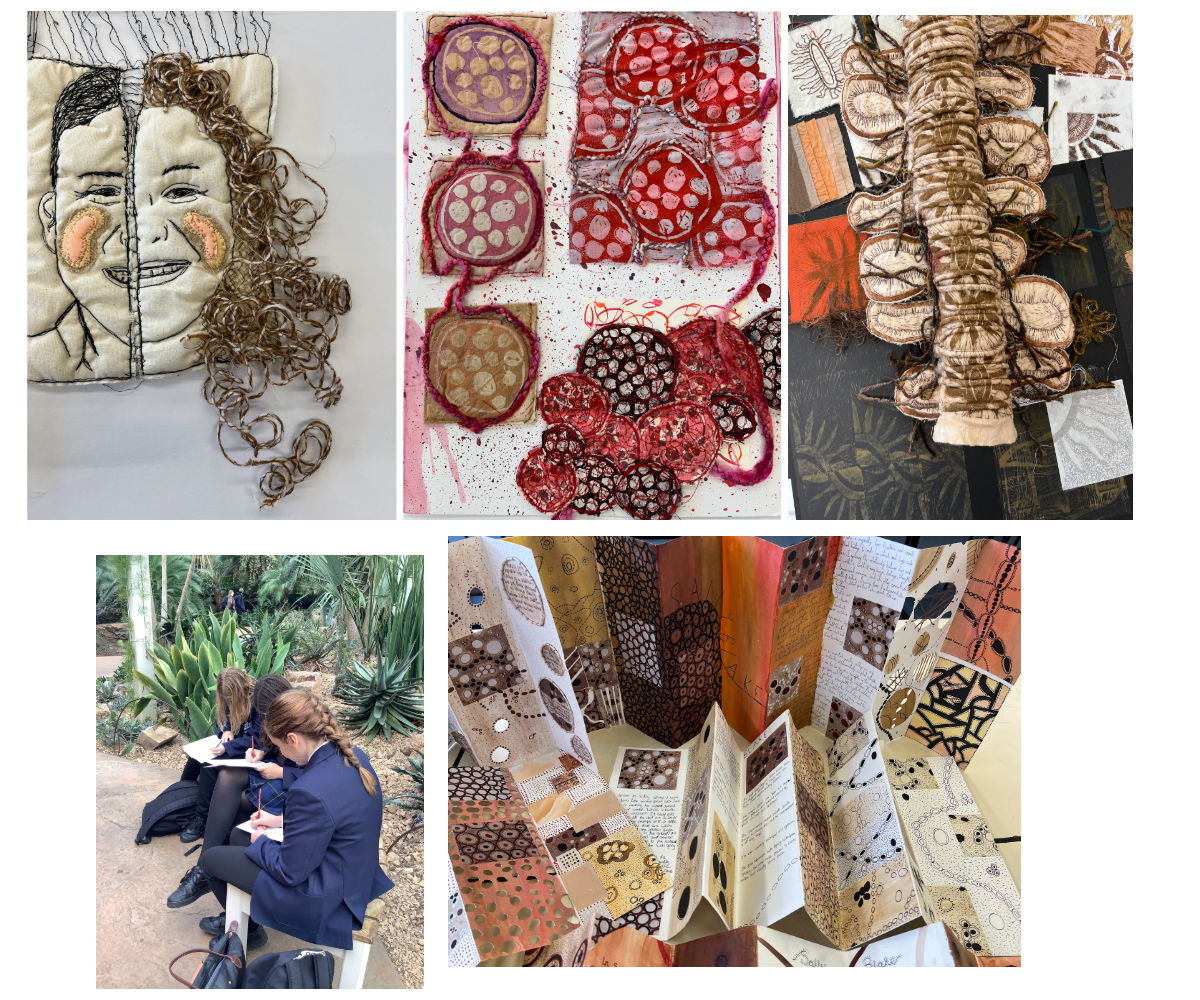
Students will be encouraged to investigate their own ideas and experiment with a wide range of textile processes, including machine stitching, printmaking, constructed textiles, fabric manipulation, concept garments, and digital design.
Photography and drawing will form the foundation of each project, as students are expected to work from their own collected images and research the work of historical and contemporary textile practitioners.
Students will have the opportunity to collaborate, discuss, and share their ideas openly, fostering a supportive and inspiring learning environment.
The course encourages students to explore the cultural context of textile design, forming personal connections between their ideas and the broader creative world.
Students will have the chance to exhibit their work throughout the course and visit museums and galleries to gain further inspiration and knowledge.
Year 1
Autumn Term:
- Introduction to textile techniques and processes
- Exploration of various themes and ideas supported by research into traditional and contemporary practice
- Creation of a series of textile outcomes
- Developing confidence in independent creative decision making
Spring & Summer Term:
- Personal investigation focusing on your choice of theme or concept (Component 1)
- Development of an individual project
- Supporting written work of 1000-3000 words
- Creation of highly developmental textile work
- Exploration of disciplines such as textile art, interiors, fashion, or costume design
Year 2
Autumn Term:
- Consolidation of personal investigation (Component 1)
- Creation of ambitious, highly developed outcome
Spring Term:
- AQA Externally Set Assignment (Component 2)
- Select a question from options provided by AQA and develop ideas in a period of preparation time
- Create a final outcome within 15 hours of supervised time.